
Training
Kilimanjaro Training Plan: How to Physically Prepare
Hill repeats, pack weight progression, and recovery weeks modelled on guests Ascend Tanzania actually guides—not Instagram influencers.
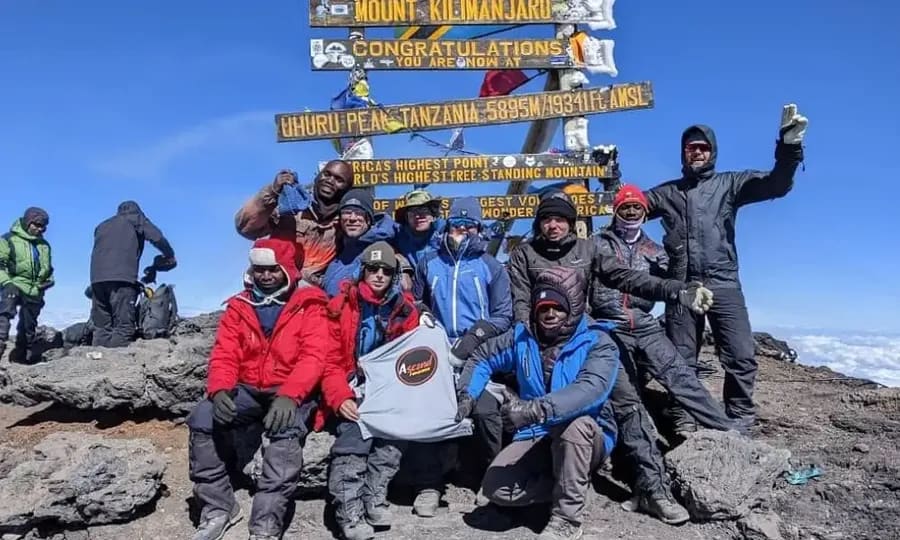
Kilimanjaro Training Plan: How to Physically Prepare for the Climb
Climbing Kilimanjaro doesn't require Olympic-level fitness, but it absolutely requires preparation. The mountain demands six to nine consecutive days of walking 5–8 hours daily at altitude, culminating in a brutal 12-14-hour summit night. Climbers who arrive untrained often fail, regardless of how youthful or naturally fit they feel.
This complete Kilimanjaro training plan gives you 12 weeks of structured preparation, the same programme our most successful climbers follow. Combine it with a proper acclimatisation strategy, and you'll arrive in Moshi ready to summit.
How Fit Do You Need to Be to Climb Kilimanjaro?
You don't need to be a marathon runner to climb Kilimanjaro. You do need to be able to:
- Walk 5-8 hours per day, 6 days in a row
- Carry a 5-7 kg daypack throughout
- Handle a 12-14-hour walking day on summit night
- Cope with sleep deprivation and altitude effects
- Push through mental fatigue when your body wants to quit
If you can comfortably hike 6 hours with a daypack on consecutive weekends, you're in a good starting place. If not, this 12-week plan will get you there.
The Three Pillars of Kilimanjaro Fitness
1. Cardiovascular Endurance
Cardio is your foundation. The thinner air at altitude means your heart and lungs must work harder. Strong cardiovascular fitness translates directly into how well you handle altitude. Focus on long, slow distance training rather than high-intensity intervals.
2. Leg Strength
Your legs carry you up Kilimanjaro and protect your knees on the long descent. Build single-leg strength, glute activation, and calf endurance. Quad and hamstring strength prevent injuries on summit night descent, the most dangerous part of the climb.
3. Hiking-Specific Endurance
Generic gym fitness doesn't prepare you for consecutive multi-hour hiking days. You need 'time on feet' training, long hikes with a weighted pack to teach your body to keep moving when tired.
Your 12-Week Kilimanjaro Training Plan
Weeks 1-2: Foundation Building
- Goal: Establish baseline cardio and strength
- Cardio: 3 sessions/week, 30-45 minutes each (walking, cycling, or jogging)
- Strength: 2 sessions/week, squats, lunges, step-ups, plank
- Hike: 1 weekend hike of 2-3 hours with a 4 kg daypack
Don't push too hard early. Build the habit of regular training first.
Weeks 3-4: Building Volume
- Cardio: 4 sessions/week, 45-60 minutes each. Add one stair-climbing session.
- Strength: 2 sessions/week with progressively heavier weights
- Hike: 1 hike of 4 hours with a 5 kg pack
Begin breaking in your hiking boots during weekend hikes.
Weeks 5-6: Adding Hills
- Cardio: 4 sessions/week, including 1 hill repeat session (10–12 hill climbs)
- Strength: 2 sessions/week, focusing on legs and core
- Hike: 1 hike of 5–6 hours with a 6 kg pack and elevation gain
If you live near hills or mountains, prioritise inclines over flat distances.
Weeks 7-8: Endurance Block
- Cardio: 4-5 sessions/week. Mix long slow distance with hill repeats.
- Strength: 2 sessions/week with single-leg work (Bulgarian splits, pistol squats)
- Hike: 1 long hike (6-7 hours, 7 kg pack) plus a shorter mid-week hike
This is where you build the time-on-feet capacity Kilimanjaro demands.
Weeks 9-10: Peak Training
- Cardio: 5 sessions/week. One should be a 90-minute steady-state effort.
- Strength: Maintain. Don't exhaust your legs before key hikes.
- Hike: Back-to-back weekend hikes (Saturday + Sunday), simulating consecutive climbing days
Back-to-back hikes are the most important workout in the entire programme. Kilimanjaro is six straight days of walking, train for that, not for one big effort.
Week 11: Final Push
- Cardio: Maintain 4 sessions of moderate intensity
- Strength: 1 light session
- Hike: 1 long hike of 7+ hours with full pack weight (8 kg)
Treat this like a dress rehearsal. Wear your boots, your pack, your full gear.
Week 12: Taper
- Cardio: 2-3 light sessions of 30-40 minutes
- Strength: Skip
- Hike: 1 short hike of 2-3 hours, no pack
Rest. Sleep. Eat well. Hydrate. You can't gain fitness this week; you can only stay fresh.
Best Hikes to Train On (By Region)
United Kingdom:
Snowdonia, the Lake District, the Brecon Beacons, and Scottish Munros all offer terrain similar to Kilimanjaro. The PYG track on Snowdon is excellent practice.
United States:
Mount Whitney (with permit), Mount Washington, the Grand Canyon Rim-to-Rim, or any Colorado 14er. Cascade volcanoes like Mount St. Helens are good altitude training.
Europe:
Tour du Mont Blanc segments, Triglav National Park, the Picos de Europa, or any Alpine hut-to-hut hiking.
Asia:
Annapurna or Langtang base treks in Nepal. Mount Kinabalu in Malaysia. Mount Fuji in Japan.
Africa:
If you can travel to Tanzania early, Mount Meru (4,566m) is the perfect Kilimanjaro acclimatisation hike. Mount Longonot in Kenya works too.
judgment
Kilimanjaro is at least as much mental as physical. Many climbers are physically capable of summiting but quit during the dark, cold hours of summit night when their mind tells them they can't go on. Mental training matters.
- Visualisation: Imagine yourself on summit night. The cold, the fatigue, the dark. Picture yourself continuing anyway.
- Embrace discomfort: Train in cold weather. Hike when you don't feel like it. Resilience is built in moments you'd rather quit.
- Trust your guides: When you're exhausted at 3 AM at 5,400m, your guides have been here a hundred times. Their judgment is better than yours in that moment.
- Break the climb into chunks: Don't think about reaching Uhuru. Think about reaching the next rest stop, then the next.
Nutrition During Training and on the Mountain
During Training
Eat enough to fuel the work. This isn't a weight-loss programme; undereating during training will hurt your performance. Focus on whole foods, plenty of protein (1.6-2.0 g per kg of body weight), complex carbs, healthy fats, and hydration.
On the Mountain
Your appetite drops at altitude, but your body needs fuel. Eat what your guides serve, even when you don't feel hungry. Carbohydrates are digested more easily than fat at altitude. Snack continuously throughout the day: trail mix, dried fruit, energy bars.
Should You Train at Altitude Before Kilimanjaro?
Pre-acclimatisation can help, but it requires planning:
- Most effective: Climb a peak above 3,500m in the 4 weeks before Kilimanjaro. Mount Meru is ideal.
- Moderately effective: Spend 2-3 nights above 2,500m elevation
- Marginally effective: Altitude training masks or hypoxic tents, limited evidence of benefit
- Not effective: A single day at altitude immediately before the climb
If you can't pre-acclimatise, the longer route (8-day Lemosho or 9-day Northern Circuit) gives your body time to adjust on Kilimanjaro itself.
Training for Climbers Over 50
We've successfully guided climbers in their 60s, 70s, and even 80s to Uhuru Peak. Older climbers should:
- Start training earlier, give yourself 16-20 weeks instead of 12
- Pay extra attention to recovery between sessions
- Get medical clearance before starting an aggressive training programme
- Choose a longer route for better acclimatisation
- Consider extra rest days during the climb
Age is rarely the determining factor; preparation is. Many of our most successful summiteers are over 50.
Frequently Asked Questions
1) Can a beginner climb Kilimanjaro?
Yes, with proper training. Most Kilimanjaro climbers are not mountaineers; they're regular people who have prepared for 3-6 months. Choose the 8-day Lemosho route and follow this training plan.
2) How long should I train for Kilimanjaro?
Twelve weeks is the minimum we recommend. Sixteen weeks is better. If you're already an active hiker, you can compress this to 8 weeks of focused preparation.
3) Do I need to lose weight before Kilimanjaro?
Excess weight is harder to carry uphill, especially at altitude. If you're significantly above a healthy weight, working towards a moderate reduction during training can help. Don't crash diet, that depletes the energy reserves you'll need.
4) Can I train for Kilimanjaro on a treadmill?
Yes, especially for cardio-based building. Set the treadmill to 10-15% incline for hill simulation. But you must do real outdoor hikes too; your feet and joints need to adapt to uneven terrain.
5) What's the most important Kilimanjaro training workout?
Back-to-back long hikes on Saturday and Sunday. This single weekly habit prepares you better than anything else for consecutive climbing days.